
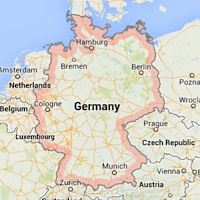
 Housing journalist Samir Jeraj takes a look at housing in Germany
We in the UK often like to borrow our policies (good and bad) from other countries. We’ve got Elected Mayors and Academy Schools from the US, Free Schools from Sweden, and Feed-in Tariffs from Germany.
What, if anything can we learn from the country with the biggest private rented housing sector in Europe, Germany?
Culture of renting
A staggering 60% of housing in Germany is private rented (compared to about 17-18% in the UK).
Renting is seen as a normal alternative to home ownership – whereas in the UK your average professional wouldn’t be caught dead in rented housing in their 40s, there isn’t the same phenomenon in Germany and people are content to live in rented housing long-term.
In fact, house-prices in Germany have actually been declining for around 30 years now.
Security of tenure
The leases granted to tenants are normally unlimited, and transferred when the property is sold on.
To end a lease, the landlord would have to give notice starting at 3 months and up to 9 months depending on how long the tenants have lived there. Tenants give 3 months notice.
Reasons for eviction are restricted to
- breaking the contract
- missing 2 months of rent
- subletting without permission
- damage to the interior etc.
Landlords can also claim back a rented property for their own use – though they would need to demonstrate ‘legitimate interest’ (e.g. if the landlord themselves was living in rented housing which was significantly more expensive).
Rent regulation
This is where is gets a bit technical! The present system allows new leases to be set an any level that’s not more than 50% higher than the average local rent.
Once a lease starts, rents cannot be raised more than 20% in three years or above average local rent. There is also some allowance for raising rent to part-cover the cost of energy-saving measures.
State and local governments generally provide subsidies for constructing private rented housing – in exchange these are let as social housing for the first few years. Presumably the idea being to transition tenants into private rented housing but without losing security.
Interestingly, Christian Democrat Chancellor Angela Merkel recently endorsed stronger rent control (somewhat unusual for a conservative politician).
Tax
(If you thought the last bit was technical…. )
I dread doing my (relatively straightforward) tax return every year, so forgive me if I don’t quite get the nuances on this.
From what I can understand here, the tax regime seems to give a fair bit to landlords in Germany. They can deduct mortgage interest, allowances for depreciation and expenses incurred on administration and the refurbishment from their total taxable income.
For a fuller explanation see from page 56 on this study from the LSE.
The Results
Well, the system seems to work for everyone (famous last words). Tenants have secure, affordable homes. Landlords have stable long-term income.
I can’t say that transferring the German system will solve the UK’s rental problems. But the German case does show that a system with strong tenants rights can also mean one that works for landlords, and one that seems to work for the German society and economy.
So, have any of you out been landlords or tenants in Germany? Or anywhere else in the world? What lessons do YOU think the UK can learn?