
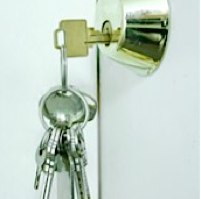
 This is a new one on me – a worrying problem submitted by Tom, who is a tenant, to the Blog Clinic:
We are tenants of a flat, our landlord is in arrears in paying his service charge. We have tried contacting the landlord with regards this, but to no success .
Anyway we’ve had a main door key stolen and we need a replacement. It’s an Abloy key that you can only get cut with a security card. The management agency hold this card. I have emailed them asking about getting replacement keys cut. They replied saying that they are unable to deal with us until the landlord pays the service charge arrears.
This can’t be right can it?
We have the right to access regardless of issues between the landlord and management agent?
What happens if we lose the remaining main door key?
Well Tom, your landlord is certainly in the wrong here, but it is difficult to see what you can do about it. Hopefuly you won’t lose your remaining key.
If you do, and your landlord still fails to pay his service charge, the only thing I can think of is for you to pay the service charge yourself – if this is the only way you can get the key cut – and then deduct this money from your rent.
Obviously you need the key to be able to use your property so this must be the only solution. Particularly if your loss of the key is not your fault – such as theft. However try to avoid the necessity if you can!
It might be an idea to write to your landlord in advance warning him that if you ever lose your keys you will have no option but to do this. Bearing in mind that if you do actually lose your remaining key you will need to deal with things urgently and will not be able to give him time to pay up first.
Whilst understanding the Management Companies frustration with the long leaseholder I suspect they cannot enforce this. Most long leases will grant various rights etc and usually this will include rights of access including by implication keys if required! The difficulty will be enforcing as it would be for the long leaseholder to bring action and no doubt the Management Company would counterclaim for the services.
Certainly agree first step is to draw this to Landlords attention as it may be that he is in dispute with the Management Company hence having not paid service charges.
Managing agents of blocks of flats do not usually get involved in landlord/tenant issues (subletting) because they don’t have a contract with the tenant. The leaseholder landlord does.
The managing agent (acting for the freeholder) has a contract with the leaseholder landlord in the form of the lease.
Surely they could contact the leaseholder themselves on behalf of the tenant if they have not already done so, regardless of the service charge arrears?
And what about the leaseholder landlord. Does he use a letting agent that could be contacted by anyone?
The trouble is, if the Tom loses his remaining key he will effectively be locked out of his property unless he can get a new one cut.
He won’t have time to start bringing expensive court actions which may not come to a hearing until after his fixed term has ended! He will need to get in so he can sleep in his bed that night.
Whether the freeholder is right or wrong in refusing to allow the key to be cut, I don’t see that practically Tom will have much option other than to pay the service charge arrears on behalf of his landlord and then deduct this from his rent.
I suppose he could instruct solicitors to bring emergency proceedings for an injunction, but I suspect that this would be a far more expensive option.
He may also be able to cut a deal with the freeholder by offering to pay part of the service charge.
If I were the tenant I would put pressure on the managing agents to stump up the key. They will have a standard charge for a replacement key no doubt, and this the tenant will have to pay, but I don’t see he should need to be involved in any problems between the leaseholder and freeholder.
The tenant should not try to reclaim the cost of the new key from the landlord as the tenant is liable to replace it, in my opinion.
I cannot see any reason why the managing agents would not produce a new key if it were paid for by the tenant and I believe this would be the best approach.
Thanks for your comment Yvette.
No I agree that the tenant is probably not entitled to reclaim the cost of the key from the Landlord.
As David points out, the landlord might be in dispute with the freeholder, so it’s not for the tenant to pay what’s due. I agree with Yvette that pressure should be put on the managing agents to produce a key especially as they are potentially denying access to the property. Tom could complain to organizations the managing agent belongs to, and perhaps as a last resort try to get another long leaseholder in the block to get hold of a key on his behalf.
Hopefully if Tom is in a situation where he has no access to the property, hopefully the managing agents would relent and allow the key to be cut. I agree that they are in the wrong in taking this attitude.
I suppose the other course of action to take is to hold the landlord at fault, claim that he is wrongly being denied access to his property by the landlords failure to provide a replacement key (strictly it is his landlord who is responsible to him for this as his immediate landlord), and withhold rent and claim compensation (eg for alternative accommodation if he cannot gain access) until the key is provided.
The landlord would then be entitled to pass this claim on to the freeholder. So the managing agents may pay up to prevent this happening.
Jennifer’s advice (in her last paragraph)is excellent sensible advice
A landlord is defined in s1[3C]Prevention from Eviction Act 1977 as including “… any superior landlord under whom that person [the immediate Landlord] derives title. ”
it is an offence under s1[3A] Prevention from Eviction Act 1977 for a landlord to do acts likely to interfere with the peace and comfort of a residential occupier orm mebers of his household***
it is also an offence under s1[3A] Prevention from Eviction Act 1977
for a landlord to persistently withdraw or withhold services reasonably required for the occupation of the premises ***
*** and (in either case) he (includingthe head landlord) knows, or has reasonable cause to believe, that that conduct is likely to cause the residential occupier to give up the occupation of the whole or part of the premises or to refrain from exercising any right or pursuing any remedy in respect of the whole or part of the premises.
the HoL held that there didn’t need to be an obligation in contract R v Burke [1991] 1 AC 135
it is a defence if he if he (ie the landlord) proves that he had reasonable grounds for doing the acts or withdrawing or withholding the services in question..
The LA might have powers under the fitness provisions