
 Housing Journalist Samir Jeraz continues his look at housing in other countries.
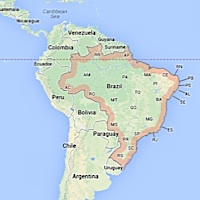
Last time I looked at how renting works in Germany. This time I thought I’d turn my attention to the Global South, and examine the system in Brazil.
According to UN Habitat, in 2010 73% of Brazilians are owner-occupiers, and 18% are tenants (7.8% are ‘shared households’).
Brazil’s housing law is generally deemed to be ‘pro-landlord’. Over the years it has experimented with rent freezes, abolishing rent controls, and reintroducing them. The Brazilian experience of rent controls is documented in this very technical study by the World Bank.
The current system dates from 1991, amended in 2010. It does get a little confusing because the law covers residential and commercial property:
- Rents are agreed at the start of a tenancy and paid in arrears
- Rent changes must be governed by an index in the contract, and happen annually. There is an agreed ‘official rate’ which the rises cannot exceed.
- Missing one rent payment (or not providing a deposit) is enough to get a tenant evicted by the courts with 15 days notice.
- A 3 month deposit or some other form of guarantee (though it is only legal to require one of these).
- Leases are granted for a minimum of 30 months. After this the landlord can terminate the lease without reason.
- Within these 30 months, there are limited grounds to repossess the home. This includes personal/family use, the contract has been broken, or by mutual agreement.
- If one party ends the lease before the fixed period they pay a proportionate fee to the other.
- If the 30 months passes and the landlord doesn’t serve a notice to quit then the tenancy is renewed on an undetermined length.
- Interestingly, the tenant has first refusal on buying if the landlord decides to sell the property.
Public housing is actually quite rare in developing countries. So, government housing programmes are often geared towards moving people out of private rented housing and into owner-occupied homes.
Even in openly ‘socialist’ Venezuela, housing policy is directed towards the state building housing then transferring ownership.
In Brazil, massive shanty towns (Favelas) have grown around the edges of cities. These often lack basic infrastructure, and the tenure and land rights of these settlements is strongly disputed. Successive governments have built public housing estates in an effort to clear the shanty towns, and forcibly evicted thousands.
Recently, the government invested large amounts of money into owner-occupation for the working classes under the Minha Casa, Minha Vida (My Home, My Life) programme. But, there are now concerns this is fuelling a housing bubble (sound familiar?!), and cost of living increases have driven some to take direct action by occupying empty buildings.
Brazil’s housing policy also hit the news when the UN Special Rapporteur for Housing, Raquel Roink, issued a critical report about the Bedroom Tax. Critics were quick to point out that the housing record of her home country, Brazil, was far from ideal (and hence missed the point of her being a UN Rapporteur).
Hi Tessa,
I’m an avid reader of your work, and I really appreciate your blog both for its concise treatment of sometimes tricky information, and for Ben Reeve Lewis’ posts every Friday.
I actually met with Raquel Rolnik on behalf of our grassroots tenants’ group while she was in London last August during a roundtable discussion with many other housing representatives. It was my understanding that the information for her report was being collected through this month, and due out in March of 2014. As far as I’m aware, her report has not been published yet – what some people objected to were her remarks regarding her preliminary findings (she thought Britain could do better on both social and private housing because she said we have done so in the past).
If I’m mistaken and there is now a report available from the UN Special Rapporteur, would you please direct me to it? :) Thanks and looking forward to more excellent content from you.
Hi Laurie,
My apologies. I was referring to her statement, rather than her report (which has yet to be published I believe).
In case it’s of use, the statement is available here: http://www.theguardian.com/world/interactive/2013/sep/11/full-statement-special-rapporteur-raquel-rolnik
Best wishes,
Samir