
 Here is a question to the blog clinic from Laura (not her real name) who is a tenant
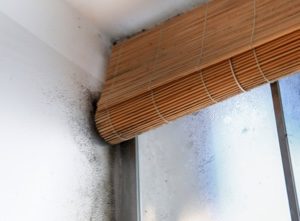
We have black mold and damp in our flat. The flat downstairs has the same issue in the same part of the house (it’s a house made into two flats).
There is ivy growing over the roof, all the windows are half painted shut (so only half of every window opens). We use a dehumidifyer, have the heating on in the morning and night, use anti-mold spray and clean the walls with the mold as often as possible. But all of this makes no difference.
We think there is a structural problem but the managing agent inspected with a maintenence man and they both said the cause of the mold was our fault.
We have since been told that we have to keep the heating on all the time, open all the windows when we dry our clothes, wipe the ceiling of the bathroom as well as the walls everytime we use the shower, and shower with the window open, even though our neighbours can see right into our bathroom.
We feel this is unreasonable and that the problem hasn’t been properly assessed, what can we do?
Answer
From what you say it sounds as if this is a structural problem, but as you say this can only be determined after a proper inspection by an expert.
However, assuming this is the case, the law treats this differently under different legislation.
The landlord’s repairing obligations
These are set out in s11 onwards of the Landlord & Tenant Act 1985. However under this legislation, your landlord cannot be forced to do anything as the property is not actually in ‘disrepair’.
So you do not have any direct claim against the landlord, eg to get an injunction to force him to get work done or to claim compensation.
The Housing Health and Safety Rating System (HHSRS)
This is a standard (from the Housing Act 2004) against which Local Authority Environmental Health Officers assess a property when carrying out an HHSRS inspection.
It is a health and safety based system where, if the property has any ‘hazards’, the landlord can be ordered to put the property in repair so as to remove the hazard. There are 29 hazards one of which is damp and mould growth.
So, as it sounds as if the problem in your property is serious, it is likely that an HHSRS inspection would throw up a ‘category 1’ hazard – which would trigger an obligation by the Local Authority to require your landlord to rectify it.
If he failed to deal with the problem, the Local Authority would need to serve an Improvement Notice and then, if the landlord ignored it, bring proceedings in the Magistrates Courts.
Problems with the HHSRS approach
First – this can only be initiated by the Local Authority – all you can do is ask them to inspect. You are not in control of the procedure after the inspection has been done.
The trouble is that, even if the Local Authority do take action, many landlords respond to this by serving a s21 notice on the tenants and requiring them to leave.
There is also the question of what actually can be done to rectify a problem if it is caused by the actual structure of the building. There could be very substantial building works needed which would require you to move out anyway – and although you are entitled to move back in again afterwards, there may be practical problems if the works are going to take a long time.
If your tenancy started or was renewed on or after 1 October 2015, you are protected from s21 claims for up to six months after the improvement notice is served. But no longer.
Long term it sounds to me as if your best option is to look around for somewhere else to live.
“The trouble is that, even if the Local Authority do take action, many landlords respond to this by serving a s21 notice on the tenants and requiring them to leave.”
Not any more Tessa on tenancies that started post 1.10.15 and come under the retaliatory evictions regime. Not if the tenant has complained in writing to the Landlord and then gone to EHO
s21 as a response to repairs complaints covered under s11 or by HHSRS went out of the window on completely new relationships that started post last October, surprised you haven’t mentioned this in your response though admittedly the item doesn’t say when the tenancy started
See the penultimate paragraph of the post.